
Backed by 90 Days Guarantee
Canadian Family-Owned Business
Trucx Brings The Entire Cummins DPF Cleaning Service to Your Location
A common point of confusion for Cummins operators is the difference between soot and ash. While they might seem similar, your engine’s ECM treats them as two distinct issues.
Soot is a normal part of diesel combustion that builds up during operation. It’s usually cleared out through regeneration. However, excessive soot can trigger warning codes like 1921 or 1922.
Ash, on the other hand, comes from non-combustible materials like oil additives and fuel contaminants. Unlike soot, ash cannot be burned away by regeneration; it stays in the filter until it’s physically removed.
This is a critical distinction. A truck can complete a regeneration cycle and clear soot-related codes, but if the underlying ash blockage remains, performance issues will quickly return.
Common Cummins fault indicators include:
Effective Cummins DPF cleaning must address both problems. It involves physically removing the accumulated ash from the filter and then updating the ECM to correctly reflect that the service has been completed.

Cummins’ emissions technology has evolved significantly, from older ISX platforms with separate components to the newer, integrated X15 Single Module system. While the single module is more compact and efficient, real-world conditions often shorten maintenance intervals.
Canadian fleets, in particular, face challenges that accelerate ash accumulation, such as:
Medium-duty platforms like the ISB6.7 and L9 can experience even faster buildup due to their use in applications with limited regeneration opportunities.
Regardless of the system’s age, one step is crucial: after a physical Cummins DPF cleaning, the ECM must be reset using the Cummins Insite Aftertreatment Maintenance Filter Installation procedure. Neglecting this step will lead to recurring fault codes, even if the filter is clean.
Many service providers focus only on the filter itself. Trucx takes a system-wide approach because aftertreatment performance depends on every component functioning correctly.
Before cleaning begins, technicians perform a comprehensive diagnostic evaluation that records:
These measurements establish a baseline for comparison after service is completed.
Following completion of the cleaning process, technicians perform the Cummins Insite Aftertreatment Maintenance Filter Installation procedure.
This critical step:
Every Cummins DPF cleaning includes a documented before-and-after report along with verified performance measurements. If diagnostic results show no measurable improvement, the customer pays nothing. Service available in Brampton, Mississauga, Toronto, and across Canada.
Regeneration removes soot. It does not remove ash. Eventually, every Cummins DPF reaches the point where professional service becomes necessary.
Trucx delivers complete Cummins DPF cleaning at your location, including full aftertreatment restoration, Cummins Insite verification, documented diagnostics, and warranty-backed results.
Trucx provides Cummins DPF cleaning for both current and legacy Cummins engine families operating across Canada.
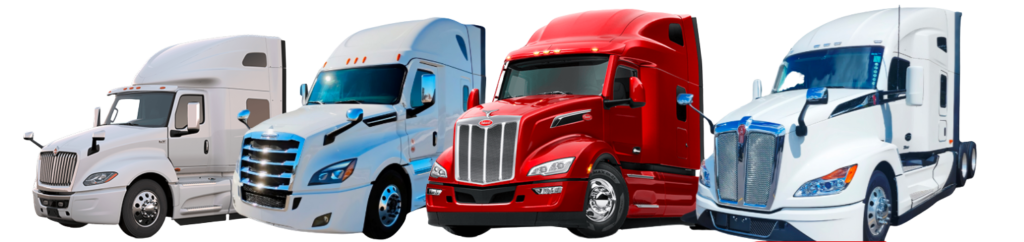
Applications include: Freightliner Cascadia, Kenworth T680, Kenworth T880, Peterbilt 579, Peterbilt 389, Volvo VNL, Mack Anthem, Western Star 49X
Used in: Regional haul fleets, Vocational trucks, Weight-sensitive Class 8 operations
Common applications: Transit buses, Refuse trucks, School buses, Urban delivery vehicles
Found in: Freightliner M2, International MV, Peterbilt 330, Peterbilt 337, Medium-duty fleet vehicles
Applications include: Industrial equipment, Construction machinery, Generator systems, Marine applications
Support available for: ISX, ISM, ISC, Older pre-2013 fleet vehicles
In addition to Cummins, Trucx services Detroit Diesel DD13, DD15, and DD16 engines, Caterpillar ACERT platforms, John Deere PowerTech systems, Kubota Tier 4 engines, and Duramax applications.
Our technicians also support equipment and vehicles from Freightliner, Kenworth, Hino, Isuzu, Mitsubishi Fuso, Ford Transit, and Ram. One mobile service call provides coverage across your entire diesel fleet.
Soot can be removed through regeneration. Ash cannot. By tracking them separately, the ECM can distinguish between a temporary regeneration issue and a maintenance condition requiring physical filter cleaning.
SPN 3720 measures DPF ash accumulation. When this value exceeds acceptable limits, physical cleaning is required. Regeneration alone will not eliminate the restriction.
Yes. After cleaning, the ECM must be informed that maintenance has been completed through the Aftertreatment Maintenance Filter Installation procedure. Without this reset, fault codes may reappear despite successful cleaning.
Service intervals vary widely depending on operating conditions. Long-haul applications may achieve 600,000 to 800,000 miles, while urban and high-idle operations often require service much sooner.
Absolutely. Our mobile technicians perform Cummins DPF cleaning at fleet yards, terminals, truck stops, and distribution centers across Canada.
In most cases, yes. DPF replacement can cost thousands of dollars, depending on engine configuration. Professional cleaning restores performance at a significantly lower cost when the filter remains structurally sound.