
Backed by 90 Days Guarantee
Canadian Family-Owned Business
Kubota Tier 4 Final engines, found in compact equipment like landscaping and utility vehicles, often operate at low exhaust temperatures. This prevents the diesel particulate filter (DPF) from getting hot enough to burn off soot, leading to clogs.
Their compact design and typical use in short cycles with frequent idling only make the problem worse, causing many operators to require professional Kubota DPF cleaning sooner than anticipated.
Common symptoms indicating a clogged DPF include:

Many Kubota owners operate small businesses where every machine, from compact track loaders to excavators, plays a critical role in daily operations. When a piece of equipment goes down unexpectedly, productivity often stops immediately. Ignoring DPF cleaning can lead to a cascade of problems that halt your work and lead to expensive, time-consuming repairs.
Neglecting your Kubota’s DPF system can result in:
Kubota DPF replacement on a compact engine costs $1,500–$5,000. A professional Kubota DPF cleaning service from Trucx costs a fraction of that and the diagnostic is free.
Trucx was built around the needs of equipment owners who cannot afford extended downtime.
Our mobile service units travel directly to landscaping yards, municipal facilities, farms, rental depots, and active construction sites in Brampton, Toronto, Mississauga, and throughout Canada.
Unlike traditional repair methods, our process does not require extensive disassembly or equipment transport. Every critical aftertreatment component is serviced in a precise upstream-to-downstream sequence.
Complete soot and ash extraction restores airflow and reduces exhaust backpressure to Kubota OEM specifications.
For SCR-equipped Kubota models, DEF crystallization and contamination are removed to restore NOx conversion performance.
Carbon buildup and oil coking are removed from turbocharger components to improve boost response and engine performance.
Every Kubota DPF cleaning service includes a complimentary diagnostic before and after the procedure. Technicians document improvements in DPF backpressure, DOC efficiency, and emissions performance. Measured improvement confirmed, or you pay nothing.
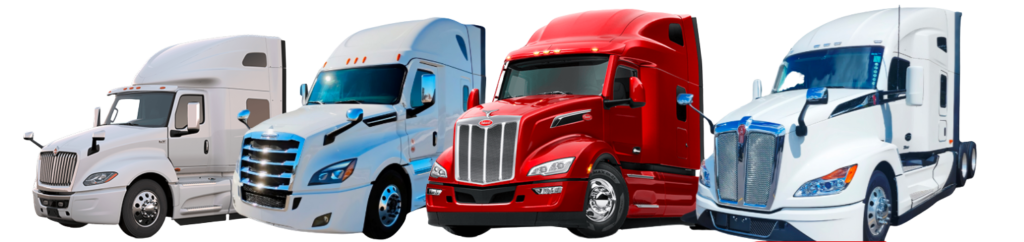
Kubota is only one of many diesel platforms that Trucx services. Using the same mobile, no-disassembly process, we also service:
Operators managing mixed fleets can have Kubota equipment and commercial vehicles serviced during a single on-site visit.
Keep your equipment working where it belongs – on the job site. Trucx delivers complete aftertreatment restoration directly to your location in as little as three hours.
Every service includes a free diagnostic, full system cleaning, documented results, and warranty-backed performance. Don’t wait for a forced shutdown during your busiest season.
Kubota Tier 4 engines generally operate at lower exhaust temperatures than larger diesel platforms. Since passive regeneration requires sustained heat, soot accumulates more quickly during landscaping, groundskeeping, municipal maintenance, and light construction.
Yes. Trucx dispatches fully equipped mobile technicians directly to your location. Equipment remains on-site throughout the service process, eliminating transportation costs and downtime.
Common signs include DPF warning lights, failed regeneration cycles, reduced engine power, excessive active regens, and fault codes related to the emissions system. Our free diagnostic confirms the actual filter condition before service begins.
Absolutely. DPF replacement often costs between $1,500 and $5,000. Professional cleaning restores filter performance at a fraction of the cost when the substrate remains structurally sound.
Yes. Every service includes documented before-and-after diagnostics and a results-based warranty. If measurable performance improvements cannot be verified, the customer does not pay for the service.