Backed by 90 Days Guarantee
Canadian Family-Owned Business
Trucx Delivers Canada’s Only 3-Hour Freightliner DPF Cleaning
Unlike other manufacturers, Freightliner trucks use various engine configurations from Detroit, Cummins, and Mercedes-Benz. This is crucial because each engine type has a unique emissions system, fault-code logic, and reset procedure.
Before starting any Freightliner DPF cleaning, our technicians identify the exact engine to ensure the correct diagnostic and reset tools are used, preventing recurring fault codes.

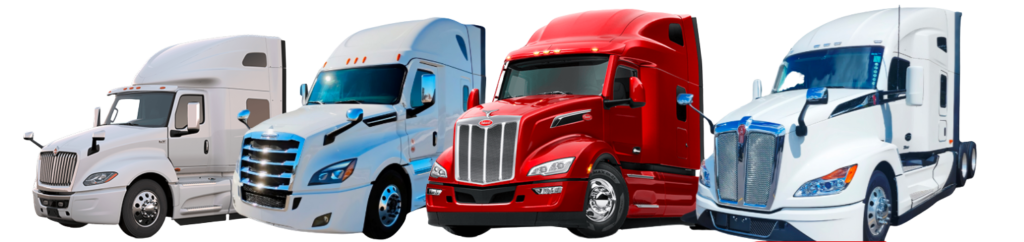
For owner-operators and fleet managers, a DPF fault is more than a maintenance issue – it’s a business interruption. A warning lamp on a DD15-powered Cascadia can escalate to a severe derate in days, leading to restricted power, poor fuel economy, and scheduling problems.
If not addressed, the truck can enter a final inducement stage, which limits vehicle speed and impacts load commitments, customer service, and profitability.
Vocational trucks face similar issues due to frequent idling and low-speed operation, which accelerate soot accumulation. When active restrictions appear, operational losses begin immediately, as the derate process does not wait for a convenient time.
At Trucx, our mission is to minimize downtime. We eliminate the need to send your trucks to a service center by bringing our specialized equipment, advanced diagnostic tools, and expert technicians directly to your location.
Every Freightliner DPF cleaning in Brampton, Mississauga, Toronto, and across Canada begins with a comprehensive diagnostic evaluation. Technicians review active and stored fault codes, measure differential pressure, and determine whether the restriction is primarily soot-related, ash-related, or due to multiple aftertreatment issues.
Once diagnostics are complete, each component is serviced in the proper sequence.
After cleaning, technicians complete the appropriate reset procedure based on engine type:
A detailed before-and-after report is included with every service. If documented performance improvements cannot be verified, there is no charge for the service.
Trucx performs Freightliner DPF cleaning across current and legacy Freightliner platforms operating throughout Canada.
Common configurations: DD13 GHG14, GHG17, and GHG21, Cummins X12
Supported engines: DD15, DD16, Cummins X15
Applications include: Medium-duty delivery, Utility service fleets, Municipal operations
Supported engines: Cummins B6.7, Detroit DD13, Legacy MBE900
Vocational applications: Construction, Refuse. Municipal fleets, Tanker operations
Heavy vocational platform supporting: DD13, DD15
Support available for: FL Series, Freightliner Classic, Older Cummins and Detroit platforms
Mixed fleets combining Cascadia and M2 trucks can be serviced during a single visit.
Your truck doesn’t need to leave the yard to receive professional aftertreatment service.
Trucx arrives with the equipment, diagnostics, and expertise required to restore the complete emissions system, perform the correct ECM reset, and verify results before the job is complete.
Three-hour service. Free diagnostic. Warranty-backed results.
Trucx supports virtually every major diesel platform in North America, including:
Yes. While the physical cleaning process addresses similar components, the diagnostic systems and post-service reset procedures differ. Detroit engines require DiagnosticLink verification, while Cummins platforms require Insite procedures.
Depending on operating conditions, a truck can progress from an initial warning to a significant power restriction within just a few days. Heavy loads and continuous operation often accelerate the process.
Absolutely. We service trucks at fleet yards, depots, truck stops, maintenance facilities, and distribution centers throughout Canada.
Mobile Freightliner DPF cleaning eliminates transportation costs, reduces downtime, avoids service queues, and allows repairs to be completed where the truck already operates.
In many cases, yes. Vocational applications involve more idling, shorter trips, and frequent stop-start operation, all of which contribute to faster soot accumulation.
On Detroit platforms, SPN 3251 and SPN 3712 indicate serious restrictions. On Cummins-powered trucks, Fault Code 1922 and severe SPN 3720 events generally require prompt service.